KEY TAKEAWAYS
- Luhn is a ~15-line mod-10 checksum and the first validation gate.
- Always check length bounds (12–19 digits).
- Combine with brand detection for better error messages.
- Luhn proves format only — live checks prove status.
- Every Luhn in Python result class should map to a defined workflow action.
- History retains Luhn in Python results for the retention window, then purges them.
The Luhn algorithm (mod 10) is the first gate in any card pipeline: it catches mistyped numbers before they reach a gateway. Here is a compact, production-ready Python implementation with the edge cases that matter.
Implementation
def luhn_ok(number: str) -> bool:
    digits = [int(c) for c in number if c.isdigit()]
    if not 12 <= len(digits) <= 19:
        return False
    total = 0
    parity = len(digits) % 2
    for i, d in enumerate(digits):
        if i % 2 == parity ^ 1:  # double every second from the right
            d *= 2
            if d > 9:
                d -= 9
        total += d
    return total % 10 == 0
A shorter variant using slicing doubles every second digit from the right by reversing the string — both are common; pick one and add test vectors.
Brand detection
import re

BRANDS = [
    ("visa",       r"^4"),
    ("mastercard", r"^(5[1-5]|2[2-7])"),
    ("amex",       r"^3[47]"),
    ("discover",   r"^(6011|64[4-9]|65)"),
    ("jcb",        r"^35(2[89]|[3-8])"),
    ("diners",     r"^(36|38|30[0-5])"),
    ("unionpay",   r"^62"),
]

def brand(number: str) -> str | None:
    for name, pattern in BRANDS:
        if re.match(pattern, number):
            return name
    return None
Test vectors
- Valid:
4307410677293014,4111111111111111,5555555555554444. - Invalid: change any single digit of a valid number.
- Edge cases: 12 and 19 digit lengths, leading zeros, non-digit separators.
What Luhn does not do
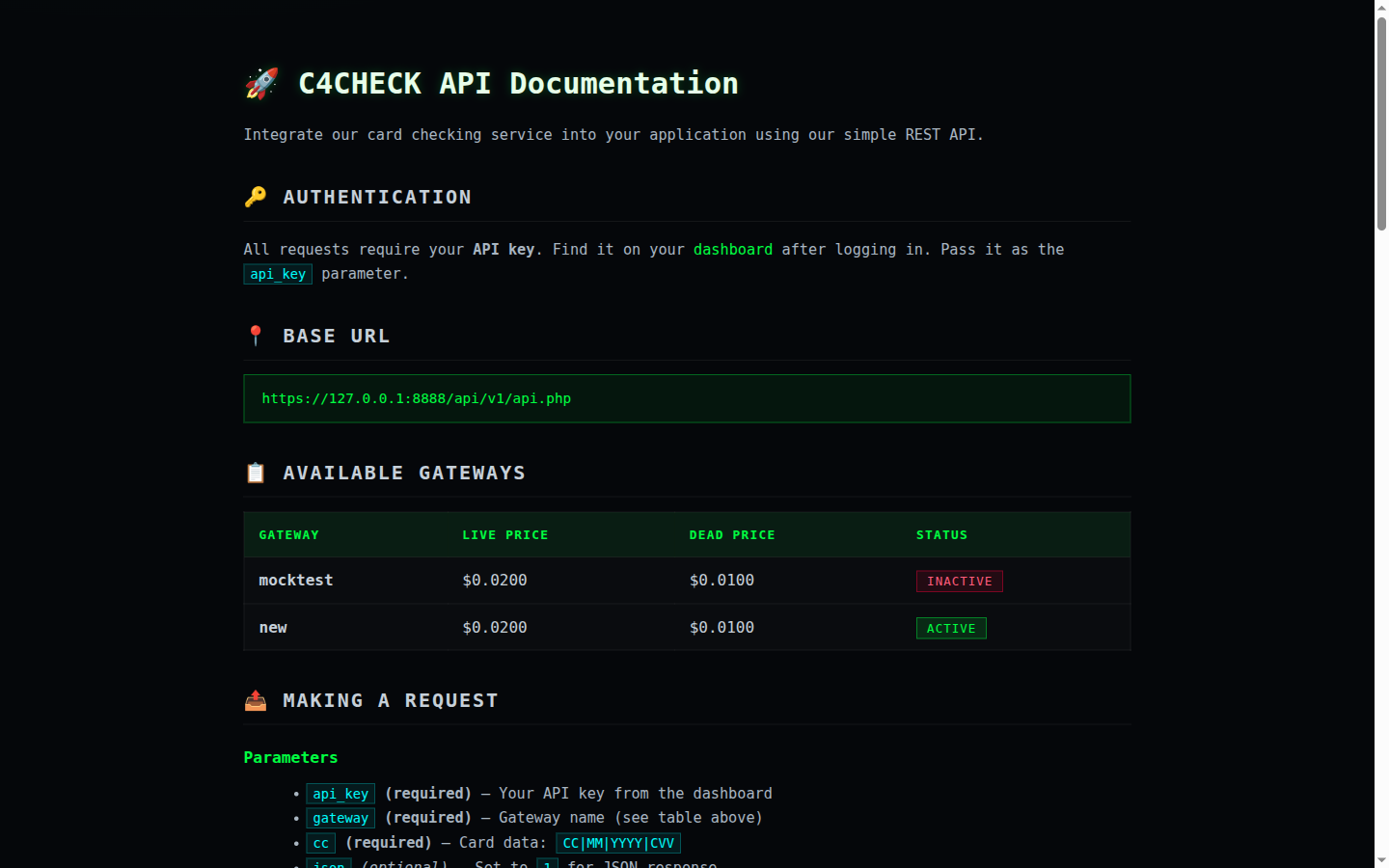
It does not tell you whether the card exists or is active. For that, call a live CC checker or the API. Keep Luhn as the cheap pre-filter so you never spend a check on garbage. Related: JavaScript version, PHP version.
Luhn in Python is a dozen lines, and the value is in where you put them: a validation gate before storage, before export, and before any paid API call. The algorithm doubles every second digit from the right, subtracts nine from results above nine, sums everything and requires a multiple of ten.
The implementation below is dependency-free and returns a boolean, which is all a pipeline needs at the gate.
Luhn in Python: a working example
def luhn_ok(number: str) -> bool:
    digits = [int(d) for d in number if d.isdigit()]
    total = 0
    for i, d in enumerate(reversed(digits)):
        if i % 2 == 1:
            d *= 2
            if d > 9:
                d -= 9
        total += d
    return total % 10 == 0
Add a circuit breaker: when the error rate crosses a threshold, pause the run and move the remainder to the fallback route. Idempotency is your responsibility on the calling side; networks retry, and a retry without protection can duplicate work. Regenerating the key takes one click on the dashboard and invalidates the old one immediately. Keep it in mind whenever Luhn in Python results are reviewed.
The API side of Luhn in Python
Branch on the result field rather than the HTTP status alone: a successful response can still carry an error outcome. Keep the integration boring: one endpoint, one key, explicit handling for the four result classes. Reconcile timeout outcomes before assuming failure — the answer may exist even when the response did not arrive. A machine-readable OpenAPI description is available for Postman, Insomnia and client generation. Keep it in mind whenever Luhn in Python results are reviewed.
Security rules for Luhn in Python
The dashboard shows the key once and lets you rotate it at will; rotation is cheap, leaks are not. Encrypted transport and account-scoped access are defaults; nothing about the integration requires changing them. API keys are server-side secrets: they belong in environment configuration, never in URLs, logs or client bundles. Log identifiers and outcomes, not card numbers. Debugging almost never requires a PAN. Keep it in mind whenever Luhn in Python results are reviewed.
What each Luhn in Python outcome commits you to
- Unknown results in Luhn in Python get one fallback pass on a second route, then a defined resting state.
- In Luhn in Python, live results route forward: billing, approval or completion, depending on the workflow.
- Errors in Luhn in Python return to the queue after the cause is fixed, because they produced no answer at all.
- Dead results in Luhn in Python route to recovery: dunning, an update-payment prompt or list cleanup.
Conflating outcomes is the most expensive habit in this area — an error treated as a dead card discards real inventory, and an unknown treated as live inflates confidence. When a result contradicts other evidence, re-check once after a reasonable interval rather than assuming the checker is wrong. Dead results are conclusive for the moment and should never be re-checked in the same run; retries on dead cards spend balance for identical answers. Remember it the next time Luhn in Python produces an ambiguous answer.
Putting Luhn in Python to work
Deduplicate before submitting: the same card in a list twice is billed twice if both copies classify. When results look wrong, diagnose in order: input format, route, provider health, and only then the cards themselves. Treat every large list as two lists: the part that classifies on the first pass, and the remainder that needs a decision about how hard to chase. Size batches to the provider ceiling. Past that line, extra concurrency converts into timeouts rather than throughput. Remember it the next time Luhn in Python produces an ambiguous answer.
Boundaries of Luhn in Python
Where a check is used inside a payment flow, it complements authorization rather than replacing it. Results describe the account, never the person; they should inform routing and risk decisions, not identity decisions. Verification is at its best when it is boring: a routine status step inside an existing, authorised process. Remember it the next time Luhn in Python produces an ambiguous answer.
Keeping Luhn in Python predictable
Schedule recurring checks ahead of the decisions they inform, not after them. Treat provider outages as routing problems: switch routes, recover the unclassified remainder, keep the answers you already paid for. Keep the API key server-side and regenerable; a leaked key is a billing incident as much as a security one. Budget verification against the cost of failure, not against zero; the comparison is what makes spend defensible. That distinction is what keeps Luhn in Python decisions clean.
From Luhn in Python result to decision
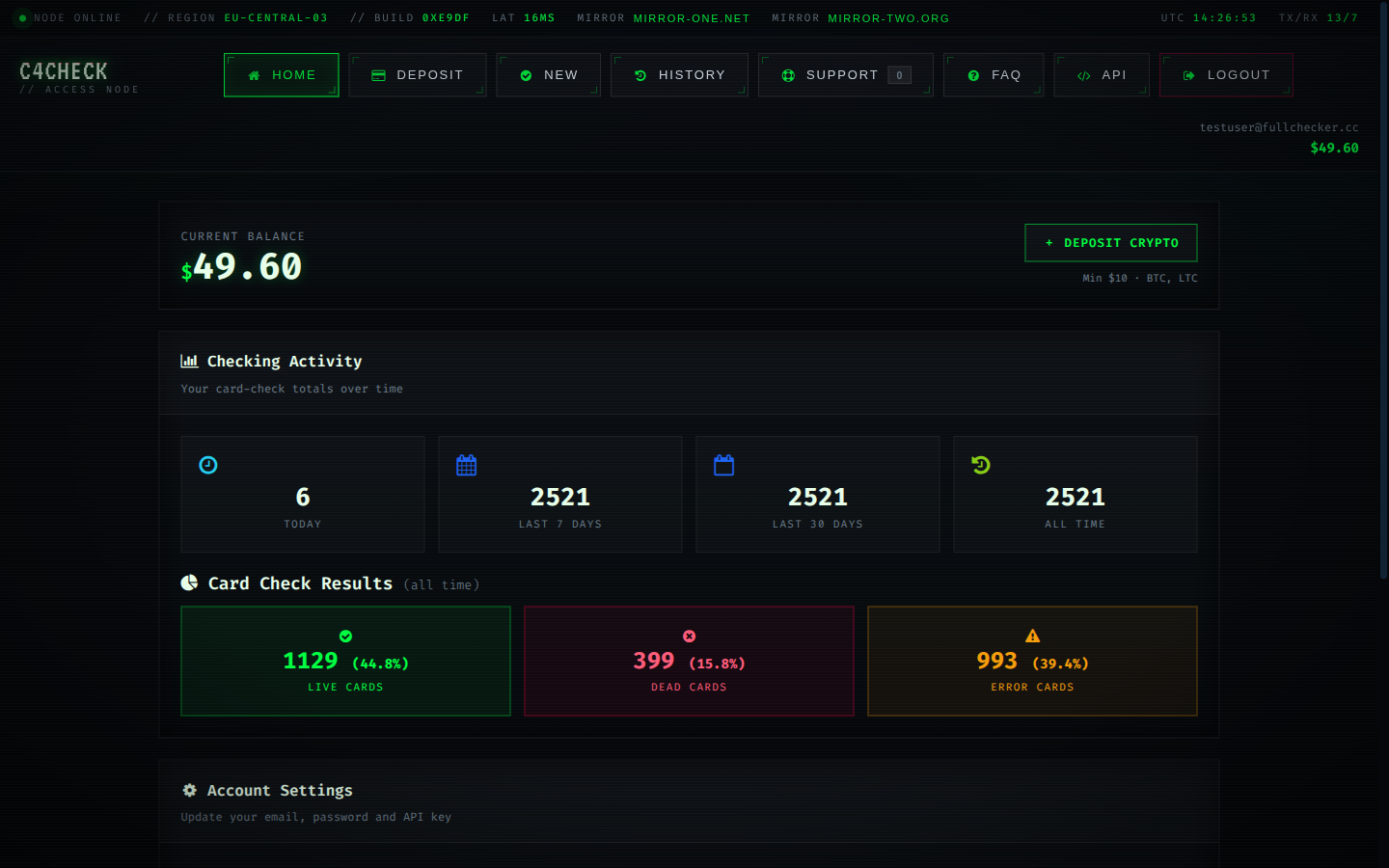
Two metrics describe any run: how many cards classify, and how long the pass takes. Everything else is commentary. The honest reading of unknown is "no answer yet". The card is neither good nor bad, and the remedy is a different route, not a repeat of the same one. A live answer is evidence about the account, not a guarantee about a specific future transaction; issuer rules can change between the check and the charge. A result is only as fresh as its timestamp. High-value decisions should use checks that ran close to the moment of the decision. It is a small rule that changes how Luhn in Python behaves at scale.
Luhn in Python in numbers
Sample sizes matter. Small windows produce noisy percentages, which is why published aggregates carry minimum thresholds. Trends beat snapshots: a classified rate that drifts over weeks says more than any single run's result. Cost per classified card is the honest metric. A cheap-per-request route with a high failure rate is the most expensive option in practice. The platform publishes outcome distributions and latency percentiles from real traffic, refreshed monthly, precisely so expectations can be calibrated against reality. It is a small rule that changes how Luhn in Python behaves at scale.